
There’s no single best fuel stabilizer for lawn mower that fits every yard or every engine. The right choice depends on how often you use your machine, what kind of fuel sits in the tank, and whether you face wet weather or long winters. These products differ mostly in their cleaning power, how much they treat per gallon, and if they can fix old gas. Two picks split most buyers: the STAR BRITE TRON Enzyme Fuel for its strong enzyme tech and the STA-BIL Storage Fuel Stabilizer for its simple, trusted storage focus.
| Best Choice | ||||
| Preview |  |  | 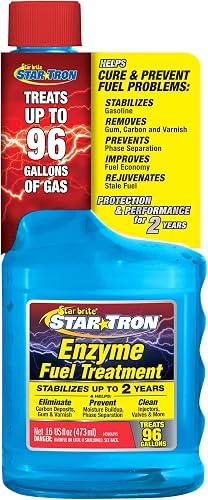 |  |
|---|---|---|---|---|
| Product | STA-BIL Storage Fuel Stabilizer | STAR BRITE TRON Enzyme Fuel | STAR BRITE TRON Enzyme Fuel | HappyFuel Fuel Stabilizer |
| Brand | STA-BIL | STAR BRITE | STAR BRITE | HappyFuel |
| The listing says | Great Product | Enzyme technology aids reliable starts Prevents ethanol-related performance issues | Advanced enzymes ensure easy engine starts Helps prevent ethanol-related performance issues | Stabilizes fuel and slows oxidation process Research-based high quality fuel stabilizer |
| More information | Buy on Amazon | Buy on Amazon | Buy on Amazon | Buy on Amazon |
1. STA-BIL Storage Fuel Stabilizer
Best for: Simple seasonal storage without extra steps.
This product focuses on keeping fuel fresh while your mower sits idle for months. The listing calls it a “Great Product,” which suggests users find it reliable for basic stabilization needs. You just add it to your tank before storing the vehicle, and it slows down oxidation to keep the gasoline ready for next season.
It works well if you want a straightforward solution that doesn’t require complex calculations or mixing ratios.
Good if:
- You store your mower for winter and want a reliable, proven solution.
- You prefer a brand with a long history in the classic car community.
- You need a product that just prevents new fuel from going bad.
Skip it if:
- You have ethanol-related issues like rough idling that need curing.
- You want to revive old, sub-spec fuel that has sat too long.
2. STAR BRITE TRON Enzyme Fuel (Gasoline)
Best for: Engines needing deep cleaning and ethanol protection.
This formula uses advanced enzyme technology designed to help engines start more reliably even after long periods of inactivity. It actively removes gum, carbon deposits, and varnish build-up to maximize fuel economy and keep the delivery system clean. The listing states it works for all engines and fuels, including lawn mowers, boats, and RVs.
One version lists a solution where one fluid ounce treats six gallons of fuel. Still, this might not suit someone who only stores a mower for a few weeks and wants a lighter touch.
Good if:
- You deal with ethanol problems causing poor performance or rough idling.
- You want to prevent water build-up in humid or wet conditions.
- You need to stabilize fuel for up to two years and revitalize old gas.
Skip it if:
- You’re looking for a very small bottle for a tiny push mower.
- You don’t care about cleaning deposits and just want basic preservation.
3. STAR BRITE TRON Enzyme Fuel (Stabilizes Old Gasoline)
Best for: Reviving old fuel and maximizing economy.
This version also uses enzyme technology to ensure all engines start easily and run smoothly after months of inactivity. It helps prevent and cure most ethanol-related issues, supporting improved engine operation when used as directed. The listing highlights that it stabilizes fuel for up to two years and can rejuvenate old, sub-spec fuel effectively.
The key difference here is the dosage; one version treats six gallons per ounce while the other treats sixteen gallons per ounce. This makes it ideal if you have a lot of old gas to save or a smaller tank that needs potent treatment. Yet, it could be overkill if you simply fill up fresh gas every week.
Good if:
- You have a boat or mower with old gas that needs immediate fixing.
- You want maximum fuel economy by removing carbon deposits and varnish.
- You need a product that disperses water safely in humid environments.
Skip it if:
- You prefer a lower concentration treatment for large fuel volumes.
- Your equipment runs on fresh fuel regularly without storage issues.
4. HappyFuel Premium Fuel Stabilizer
Best for: Premium oxidation control backed by ASTM testing.
HappyFuel positions itself as the highest performing stabilizer available, a claim supported by thorough testing against ASTM D525 standards. The product works by adding to gasoline to slow down the oxidation process, ensuring your vehicle remains ready for use whenever you return. Members of the classic car community use this stabilizer exclusively in all their own cars, relying on it for long-term storage needs.
Directions specify pouring a full can into your tank before filling up with gasoline to create a robust mix. This single-step application simplifies the process for owners of boats, lawnmowers, snowmobiles, and motorcycles. However, the listing doesn’t mention specific ratios per gallon or enzyme capabilities for cleaning existing deposits. If you need to treat small amounts of fuel precisely without using an entire can, this method may be inefficient. Furthermore, if you require enzyme technology to cure ethanol problems or clean gums, this product offers no such features.
Good if:
- You want a product tested against specific industry standards like ASTM D525.
- You’re a classic car enthusiast looking for high-quality additives used by peers.
- You prefer a full-can application method for easy mixing during seasonal storage.
Skip it if:
- You need a specific ratio to treat small amounts of fuel precisely.
- You require enzyme technology to cure ethanol problems or clean gums.
What to Look for in Best Fuel Stabilizer for Lawn Mower
All four options aim to protect your lawn mower’s engine during storage, but they take different paths. The two Star Tron products overlap heavily because both use enzyme technology to clean systems and handle ethanol issues. They’re close enough that the choice barely matters unless you need the specific dosage ratio. STA-BIL and HappyFuel differ more significantly; one offers simple storage focus while the other leans on ASTM testing claims. If you just need to stop old gas from turning bad, any of these will likely work, but the Star Tron models stand out for active cleaning.
Star Tron treats fuel at a rate of one fluid ounce per six gallons, whereas the alternative Star Tron listing specifies one ounce for every sixteen gallons. This discrepancy in concentration means you must check which formula you hold before pouring, as using the wrong ratio wastes money or leaves fuel unprotected. Both versions claim to revitalize old gasoline, though only one explicitly mentions being an economical option.
STA-BIL appears only as a title and brand name without any specific usage instructions or performance metrics in the source material. HappyFuel requires you to pour a full can into the tank and fill it with gasoline before storing the vehicle. HappyFuel focuses on slowing oxidation through antioxidant action tested against ASTM D525 standards.
When choosing between these overlapping solutions, look for the specific gallon ratio if you want to minimize cost per treatment. If your priority is preventing water buildup in humid conditions, the Star Tron descriptions provide the necessary details about submicron droplet elimination that the other brands omit entirely. For classic car owners, the HappyFuel method of filling the tank after adding the product offers a straightforward path.
Still Not Sure?
How often will I really use my mower?
If you use it rarely and let it sit for months, the Star Tron options offer better protection against old fuel issues. For occasional users, the enzyme tech in STAR BRITE TRON Enzyme Fuel ensures the engine starts easily when you finally pull the cord.
What do I already own that this has to work with?
If you have old gas sitting in a tank right now, the STAR BRITE TRON Enzyme Fuel (Stabilizes Old Gasoline) can help rejuvenate it immediately. For fresh fuel storage, the STA-BIL Storage Fuel Stabilizer provides a reliable baseline without needing extra cleaning power.
What am I most likely to regret choosing?
Regret usually comes from picking something that doesn’t clean ethanol gunk if you have that problem. In that case, the STAR BRITE TRON Enzyme Fuel (Gasoline) avoids the issue by curing poor performance and rough idling directly.
HappyFuel adds to gasoline to stabilize your fuel and slow down the oxidation process. Your vehicle will be ready for use when you are. Use the Best – We’ve researched the best possible additives and created HAPPYFUEL to bring you the highest quality and best performing fuel stabilizer available. Backed by Science – We thoroughly tested against ASTM D525 and developed the highest performing fuel stabilizer on the market. We Care – We’re long standing members of the classic car community. We use HappyFuel fuel stabilizer exclusively in all of our cars. Directions – Pour a full can of HappyFuel into your tank and fill up gasoline before storing your vehicle.
Frequently Asked Questions
Does this stabilize old gasoline that’s already bad?
Yes, the STAR BRITE TRON Enzyme Fuel can revitalize old, sub-spec fuel and keep it from going bad. The STA-BIL Storage Fuel Stabilizer focuses on preventing new fuel from going bad rather than fixing old messes.
Can I use this on a lawn mower with an ethanol blend tank?
Both Star Tron products specifically address ethanol-related problems like phase separation and rough idling. The STA-BIL and HappyFuel listings don’t explicitly claim to cure ethanol issues, so check your tank type first.
How much product do I need for a standard tank?
One fluid ounce of Star Tron treats either six or sixteen gallons depending on the specific bottle you buy. HappyFuel directions say to pour a full can into the tank before filling up, which implies a different usage rate.
Will this help my mower start after winter storage?
The Star Tron formulas use enzymes to ensure engines start easily and run smoothly after months of inactivity. All listed products aim to keep fuel ready, but the enzyme tech offers a specific advantage for cold starts.